Proving you are trustworthy has become a full-time job.
Every enterprise deal stalls at the same wall: a 300-question security questionnaire, a due-diligence pack, a SOC 2 or ISO 27001 audit. The answers are already inside the company, but pulling them together falls on its most senior, most expensive people, who lose weeks retyping what they have written and re-gathering evidence they have already produced a dozen times before. The work is enormous, repetitive, and unforgiving: one wrong answer can sink a deal or fail an audit. We built Diligio because this is exactly the kind of work software should carry.
Agents got capable. Trust did not come with them.
In the last year AI agents became good enough to do real work. They did not become safe enough to send raw to an auditor, a regulator, or a buyer’s security team. Raw capability is now a commodity anyone can buy; the trust to act on it is not, and that gap is where most AI tools quietly fail. We started Diligio on the harder half of the problem from the first commit.
The model proposes. The system verifies. A human certifies.
We never let a language model have the last word. Every answer runs through a verification layer before anyone relies on it, the same architecture the most accurate AI teams are converging on.
Propose
An agent drafts the answer, the control status, or the evidence it needs, grounded in your curated knowledge base rather than the open internet.
Verify
Every claim is anchored to a source you can open, with a full audit trail behind it. Refine the context enough and the model does not have to work hard to be right.
Certify
Nothing is attested or sent until a named person signs off. The model proposes, but a human always holds the pen.
Today our answers are over 96% source-mapped, and the same loop runs behind every control status. The target we are building towards is the near-deterministic accuracy, the 99.99% common in rules-based systems, that a verification layer makes reachable for AI.
Two products. One knowledge base.
This is live software, not a roadmap slide.
Automates RFPs, DDQs, and security questionnaires with over 96% source-mapped accuracy, so revenue teams answer in hours instead of weeks.
Diligio ComplianceRuns ISO 27001 and SOC 2 on the same base. An agent gathers the evidence and proposes control statuses, and a human certifies each one, so security teams reach an audit with the work already done and signed off.
Both run on the same verified knowledge base, so the work your team does in one compounds in the other.
Every answer makes the next one better.
Diligio’s advantage is not a model anyone can rent. It is the knowledge base our clients verify as they work. Every confirmed answer and every certified control becomes a durable, reusable asset: the context the model reasons over, owned by the client, getting more reliable the more it is used. A generic wrapper starts cold on every question. Diligio starts from everything the organisation has already confirmed to be true, and that head start widens with every answer.
Four choices that compound for us.
Architectural commitments that pay off over time and cannot be copied by a wrapper.
The verifiability commitment
We reject the unverified outputs of generic LLM wrappers. Diligio works in two layers: the AI proposes an answer, and a verification step confirms it before you rely on it. In Diligio Respond that means every answer is anchored to a source citation you can open and check. The model never gets the last word on its own.
AI proposes, humans decide
Automation should remove the typing, not the judgement. An agent can draft an answer, propose a control status, or assemble evidence, but a person stays in the loop on anything that gets attested or sent. In Diligio Compliance, an agent proposes and a human certifies before anything is recorded against a framework, so accountability always sits with a named person.
Strict tenant isolation
We process sensitive client data with strict per-tenant isolation, enforced at the database layer with PostgreSQL Row-Level Security, so users only ever reach their own organisation's data. That data is held in the EU, and access is governed by role-based controls rather than trust.
The anti-seat-tax philosophy
Traditional software vendors fence knowledge behind steep per-seat surcharges. We provision up to 1,000 collaborative seats on a single flat annual licence, with pricing published openly rather than quoted on request, so a whole organisation can work from one knowledge base without being taxed by headcount.
Built by someone who lived the problem.
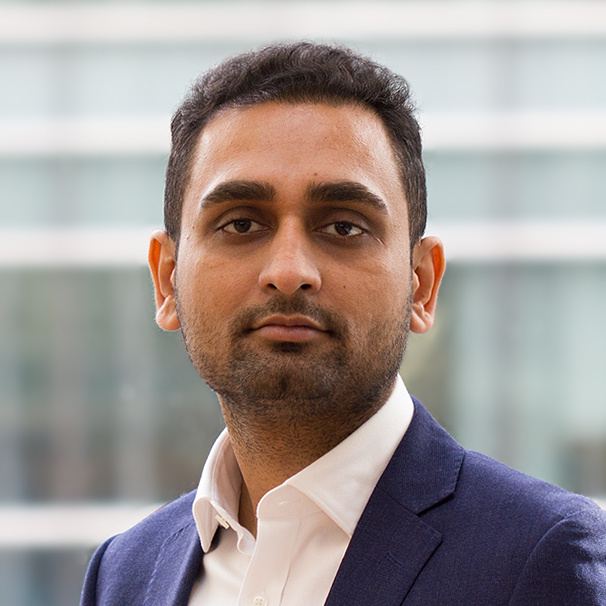
Eight years in investment banking and tech start-ups, at BlackRock, J.P. Morgan, Copper Technologies and Société Générale.
He led the RFP and DDQ teams Diligio was built for, and saw firsthand how much senior time disappears into questionnaires and audit evidence requests that ask the same things every time. He built Diligio to carry that work.
LinkedInThe conviction we share with the best vertical AI teams is that it takes a granular understanding of a workflow to nail down how AI can help. We start with the workflows that already have a budget, crush it, and connect the rest of a company’s knowledge sources into a single context graph that agents can reason over and act on.
Automate the proposal grind
We started with Diligio Respond because the proposal grind is where the pain and the budget already sit. Taking the heaviest text-compliance load first freed subject-matter experts from work they had redone a dozen times, and proved the verification loop on answers that have to be right.
Expand the ecosystem
That expansion is already live. Diligio Compliance extends the same verified knowledge base to ISO 27001 and SOC 2, so the answers a team confirms once become evidence they can reuse. The longer arc is to bring audit, security, and compliance onto one platform, with pricing kept transparent.
The connective layer
Mapping a company’s operational knowledge today demands exhaustive integration work. Teams are left stitching together Slack channels, Linear tickets, GitHub repositories, Notion workspaces, and call recordings using fragile custom code. No product yet turns this scattered context into a single graph that an agent can reason across. Diligio plans to build that connective layer, a verified context graph that makes an entire organisation legible to AI, so the same knowledge that answers a questionnaire today can drive any workflow tomorrow.
We started with a single questionnaire. We are building the layer everything else connects to.